Steady your anxiety before it takes over your day.
You get things done. You hold it together through the meeting, the school run and the deadline. But underneath, your mind keeps racing, your body stays tense, and even rest does not always feel like rest. PANIC2POWER™ gives you one clear place to turn when you need to know what to do next.
Instant digital download. One-time purchase. No subscription.
Instant digital access
Secure checkout via Stripe
Download immediately
Lifetime access
Special Launch Price
$254$47
You do everything right.Yet you still feel wrong.
You've read about anxiety.
Books, articles, videos, podcasts. You understand it.
But knowing what should help is not the same as being able to use it
when your mind is racing and your body will not settle.
When the pressure rises,
you do not need another technique to remember. You need one clear next step.
This system helps you find that next step.Simple. Clear. In the moment.
In-the-moment tools Use immediately when it hits.
Practical & simple No complicated theory. Just clear actions.
Designed for real life For busy days, hard days and everything in between.
Backed by experience Created from lived recovery and years of helping others.
Why This System Works Differently
Most anxiety advice gives you more to remember. This system gives you something to follow.
When your mind is already racing, searching through everything you have learned can feel impossible.
You need one clear next step you can actually follow.
Most Advice
During calm
You learn and collect more information.
During anxiety
You try to remember everything you've learned.
Decision
You overthink and try to figure it out.
Outcome
Overwhelm, guilt, and the cycle continues.
During calmDuring anxietyDecisionOutcome
This System
During calm
You practice small steps that build your system.
During anxiety
You follow the next step. That's all.
Decision
One clear step. No thinking required.
Outcome
Less guessing. More clarity. A way forward.
This is not more theory to remember. It is something practical to follow when thinking clearly feels difficult.
Introducing PANIC2POWER™
Five steps. Ninety seconds.
Decided now, so you never have to decide then.
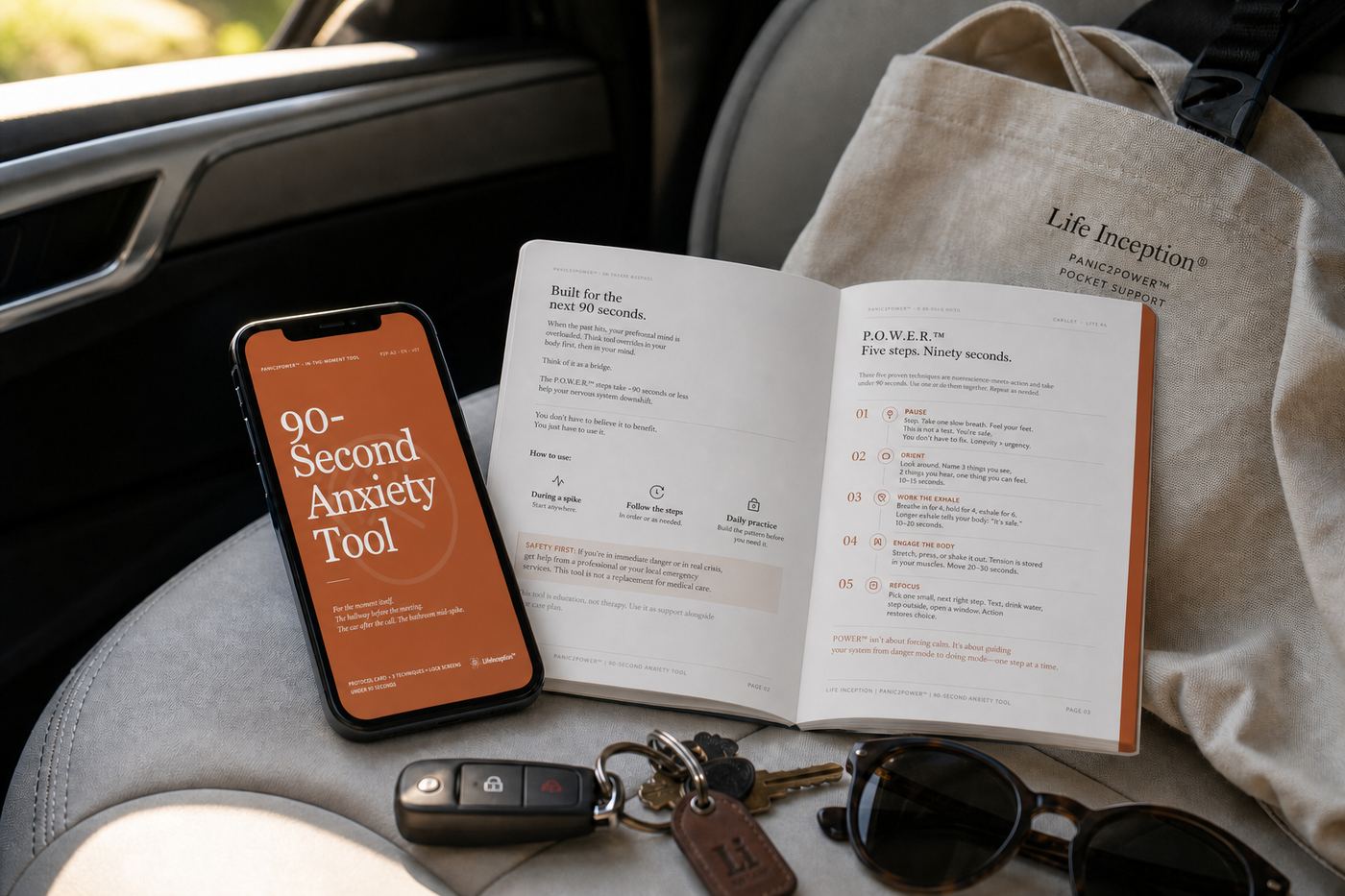
PANIC2POWER™ is not another folder of resources you have to sort through. At its core is the P.O.W.E.R. Protocol — the same five steps, ready in advance, so you are not left deciding what to try while you are already overwhelmed.
The protocol has exactly one home.
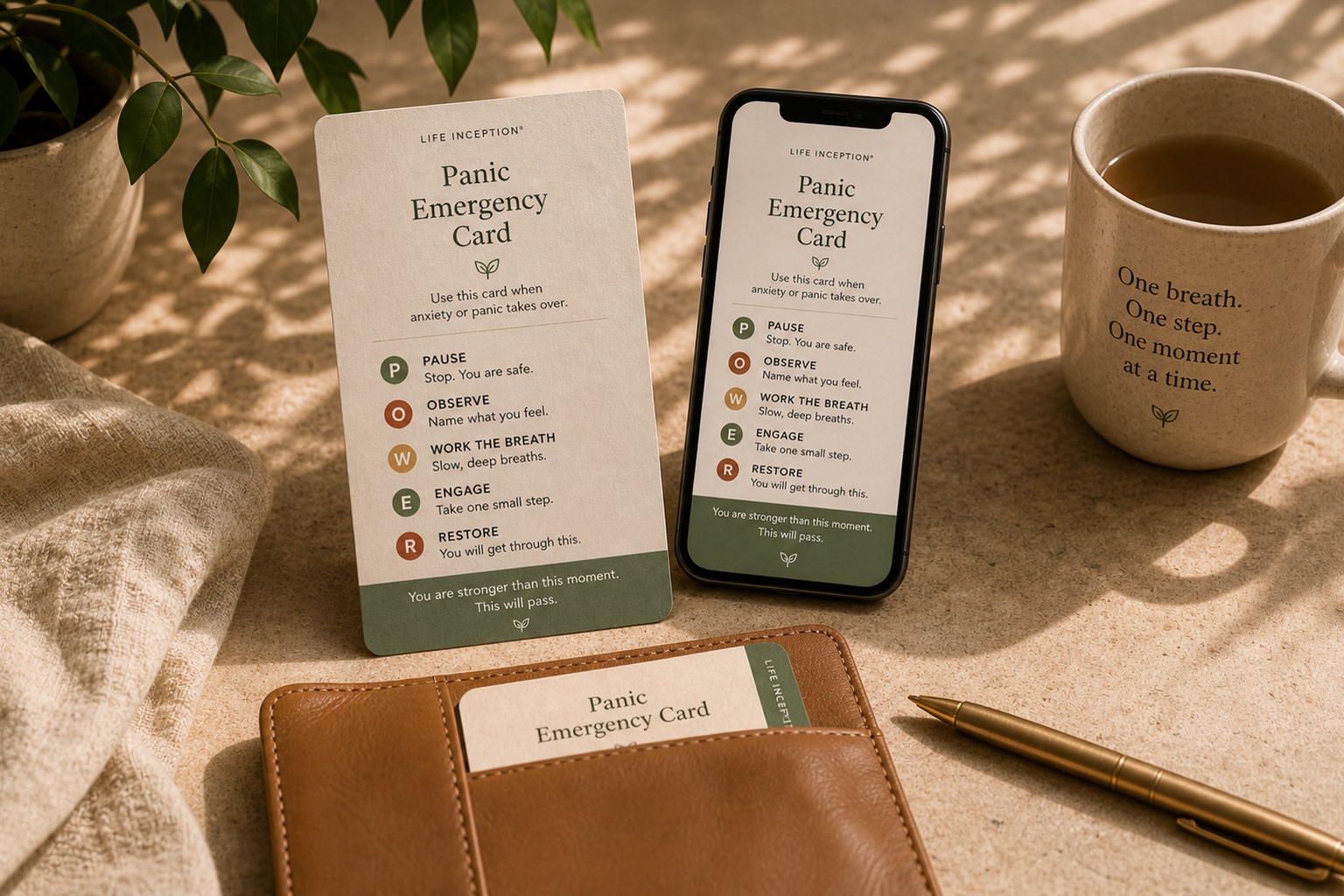
• The full five steps live in your 90-Second Anxiety Tool — wallet card and phone version.
• Every other piece in the system references this card instead of reprinting it.
Most anxiety bundles leave you with several tools and the same difficult question: which one should I use now?
Here, the protocol has one clear home, and every other resource guides you back to it.
The Offer
PANIC2POWER™One practical system for the moments you need a clear next step.
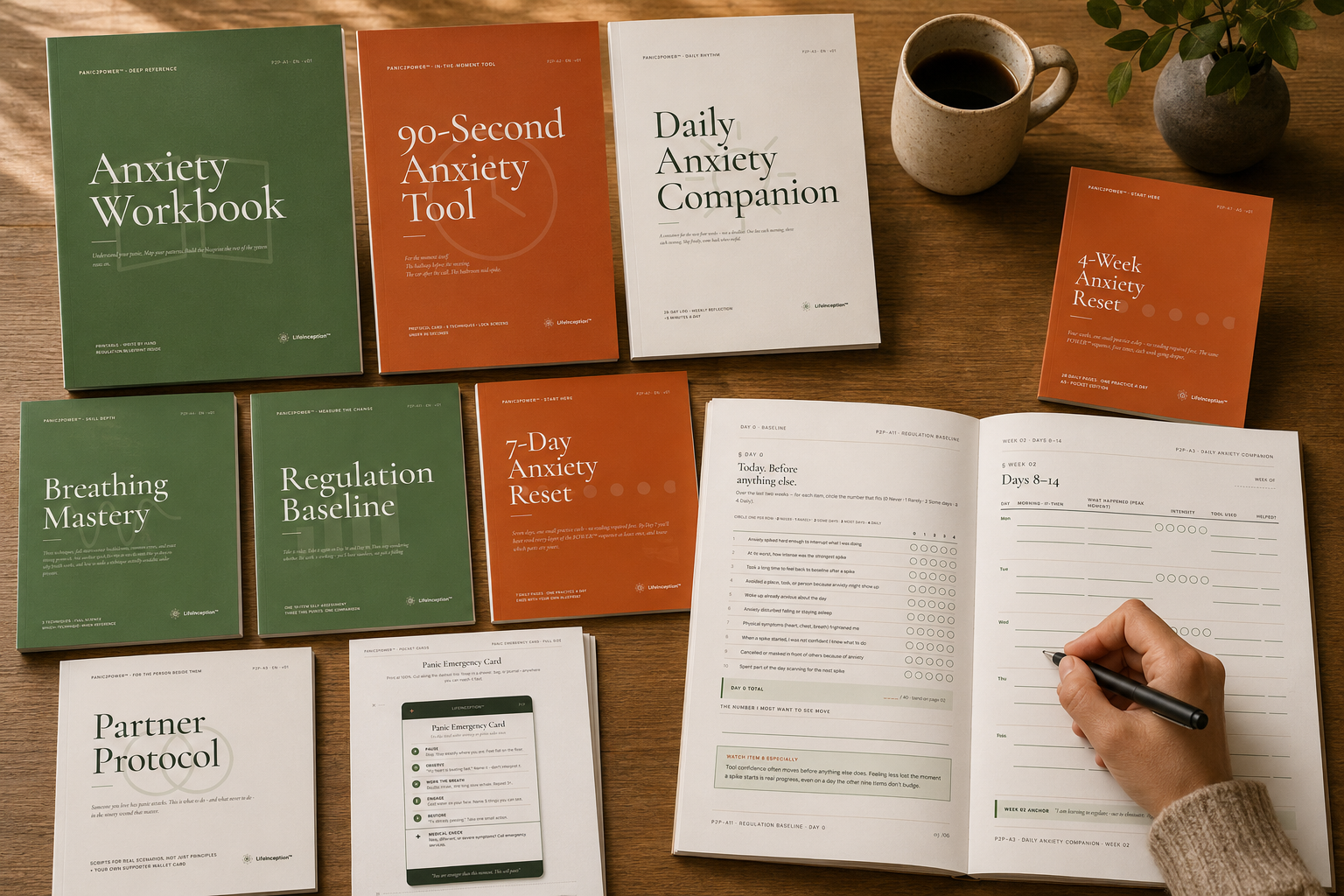
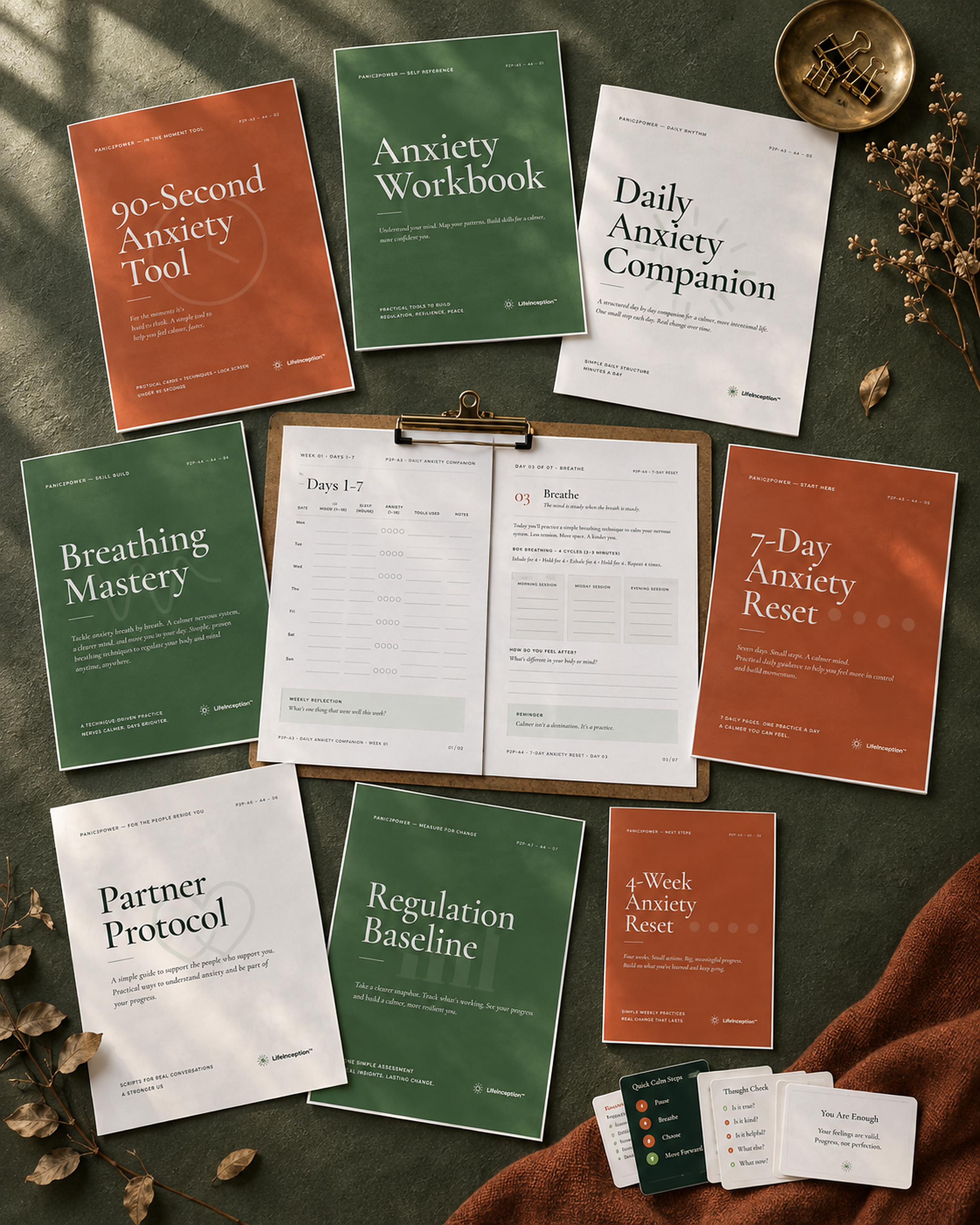
A seven-piece core system and three practical bonuses, ready whenever anxiety, mental pressure or overwhelm makes it difficult to know where to begin.
Wallet cards & phone versions for the moment itself
Printable workbooks & daily trackers (A4 + A5)
An extended 4-week reset, once your first week is done
A partner guide, plus a 0/30/90-day progress check
Different lives. Different stories. One meaningful shift.
Words from people who chose to share a small part of their journey.
A
Anna K., 41
HR Director
Leading people at work while raising two young children at home.
“
Something shifted in week three. I stopped waking up already in survival mode. It turns out I wasn't broken. I was just working without any tools.
D
Diane S., 48
Secondary School Teacher
A teacher by vocation, carrying the emotional weight of years in the classroom.
“
The first time I used it in a supermarket I could have cried with relief. Having something physical to hold and follow when my mind goes completely blank — I didn't know how much I needed that until I had it.
S
Sarah W., 39
Operations Director
Keeping complex operations moving under constant responsibility.
“
This was the first thing that did not tell me to set better boundaries or take breaks. It gave me something to actually do. That specificity made all the difference.
Individual experiences vary. These stories are shared in each person’s own words and are not clinical claims or medical advice.
*All testimonials were shared privately and are published here with the individuals’ permission. Names are shortened where appropriate to protect personal privacy.
What's Inside
Five pieces. One core system.
Five core pieces, each with one clear purpose, so you always know where to begin — plus two more essentials and three bonuses below.
Entry Point
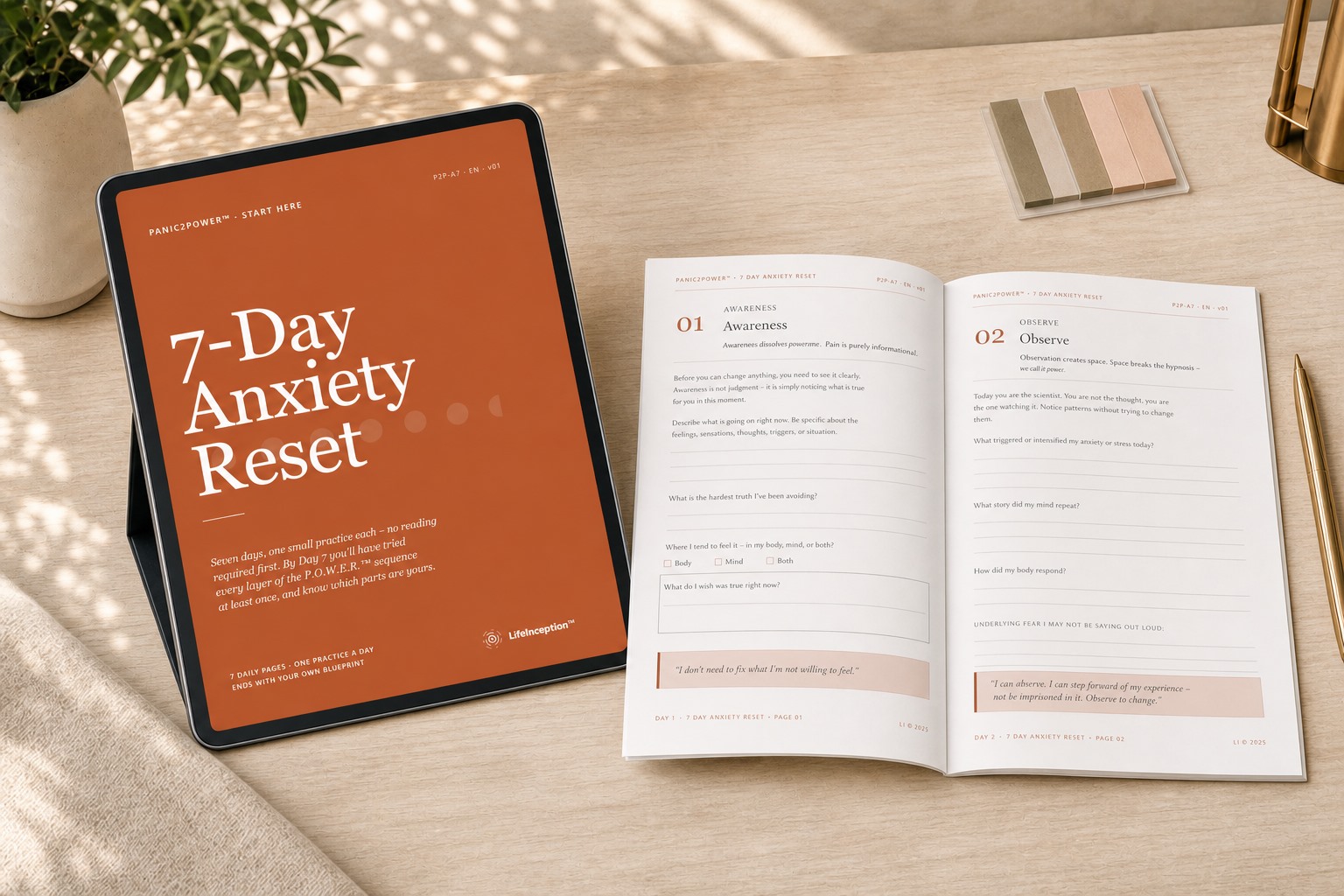
7-Day Anxiety Reset
Seven days, one small practice a day — no book to read first. By Day 7 you have a personal Regulation Blueprint you built yourself.
One practice a day
Around ten minutes — never five techniques thrown at you at once.
Ends in your own Blueprint
A document that's genuinely yours, not a completion badge.
10 pages Printable + digital
~10 min per day
Best for getting started
In-the-Moment Hero Product
90-Second Anxiety Tool
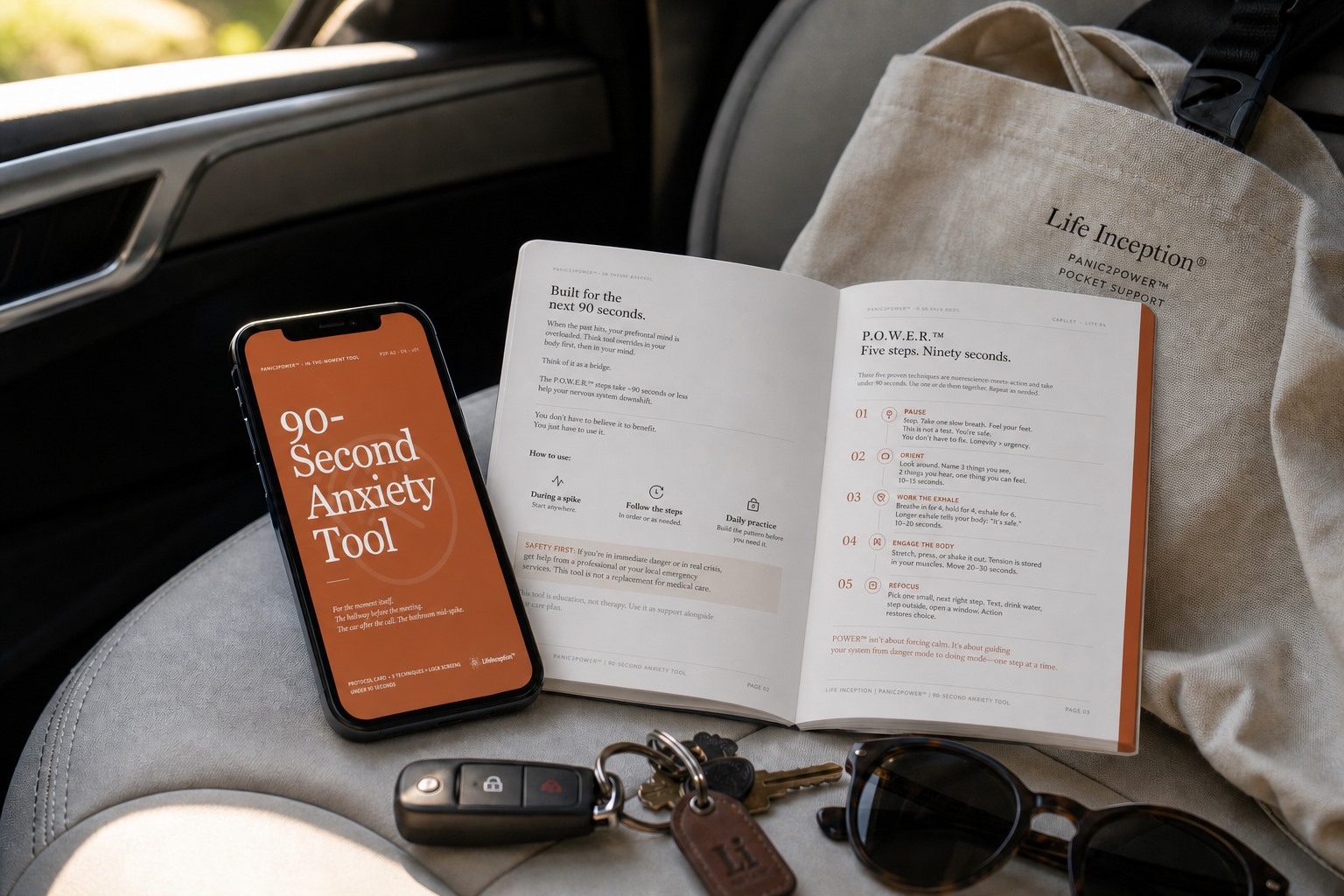
The anxiety tool that isn't an app. A real wallet card, cut to true pocket size — because the moment you need it most is the moment your phone is the last thing you can deal with.
An actual object, not a screenshot
Sized for a wallet or breast pocket — the medical caveat is printed on the card itself.
Under 90 seconds
Five steps decided in advance, so nothing has to be figured out mid-spike.
Also lives on your phone
A lock-screen version for the moments the card isn't on you.
10 pages + printable wallet card
< 90 sec to use
Best for the acute moment
Deep Reference
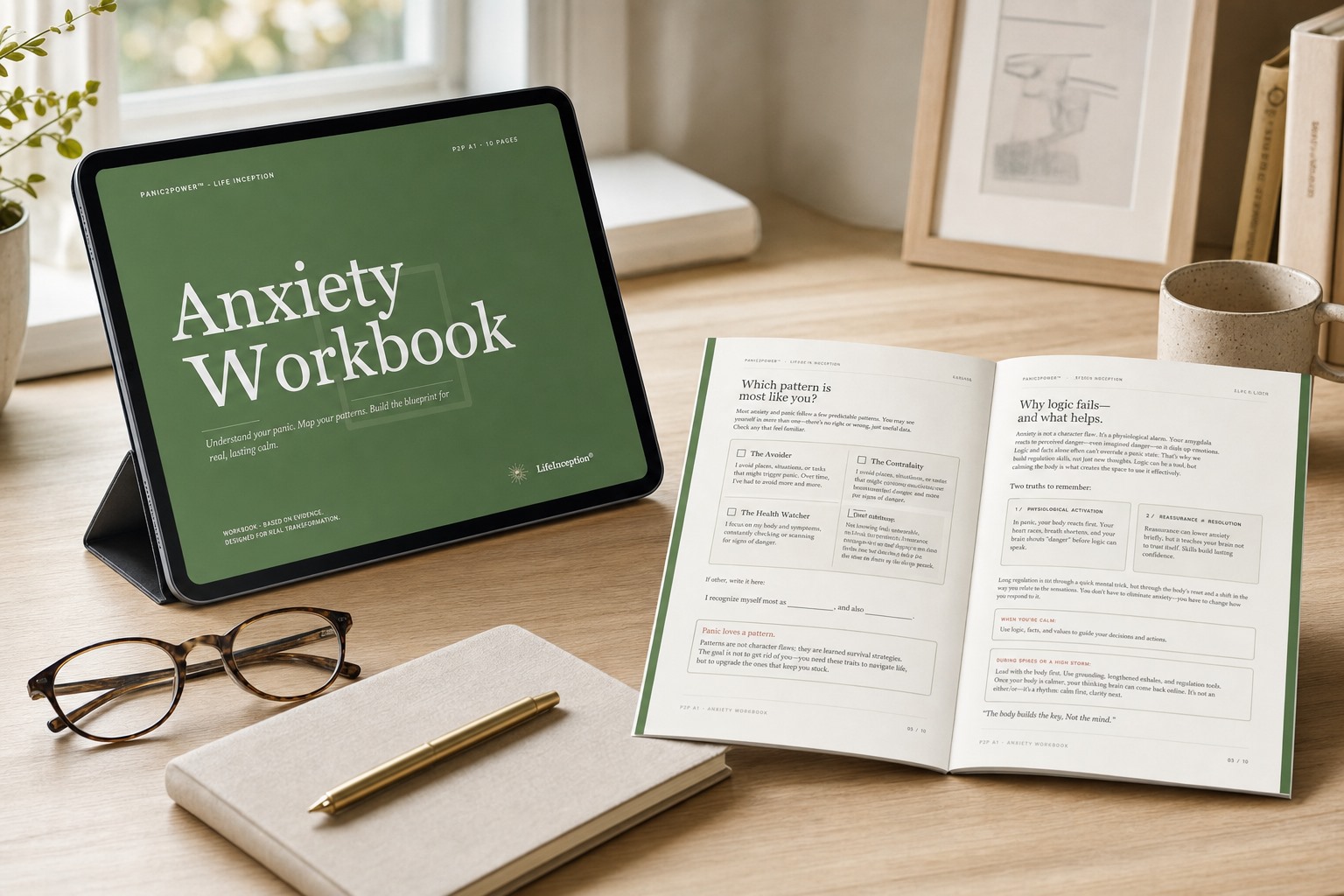
Anxiety Workbook
Find out which of five anxiety patterns is actually yours — then work it with a structured thought record built for your pattern, not a generic worksheet.
Pattern Recognition
Five recognizable anxiety patterns, each pointing to the exact tool that helps.
A real CBT thought record
Trigger, automatic thought, evidence, and a balanced alternative — right on the page.
Home of your Blueprint
The one place your Regulation Blueprint lives, and gets refined over time.
10 pages Printable + digital
Fill-in scaffolds
Best for understanding your pattern
Daily Rhythm
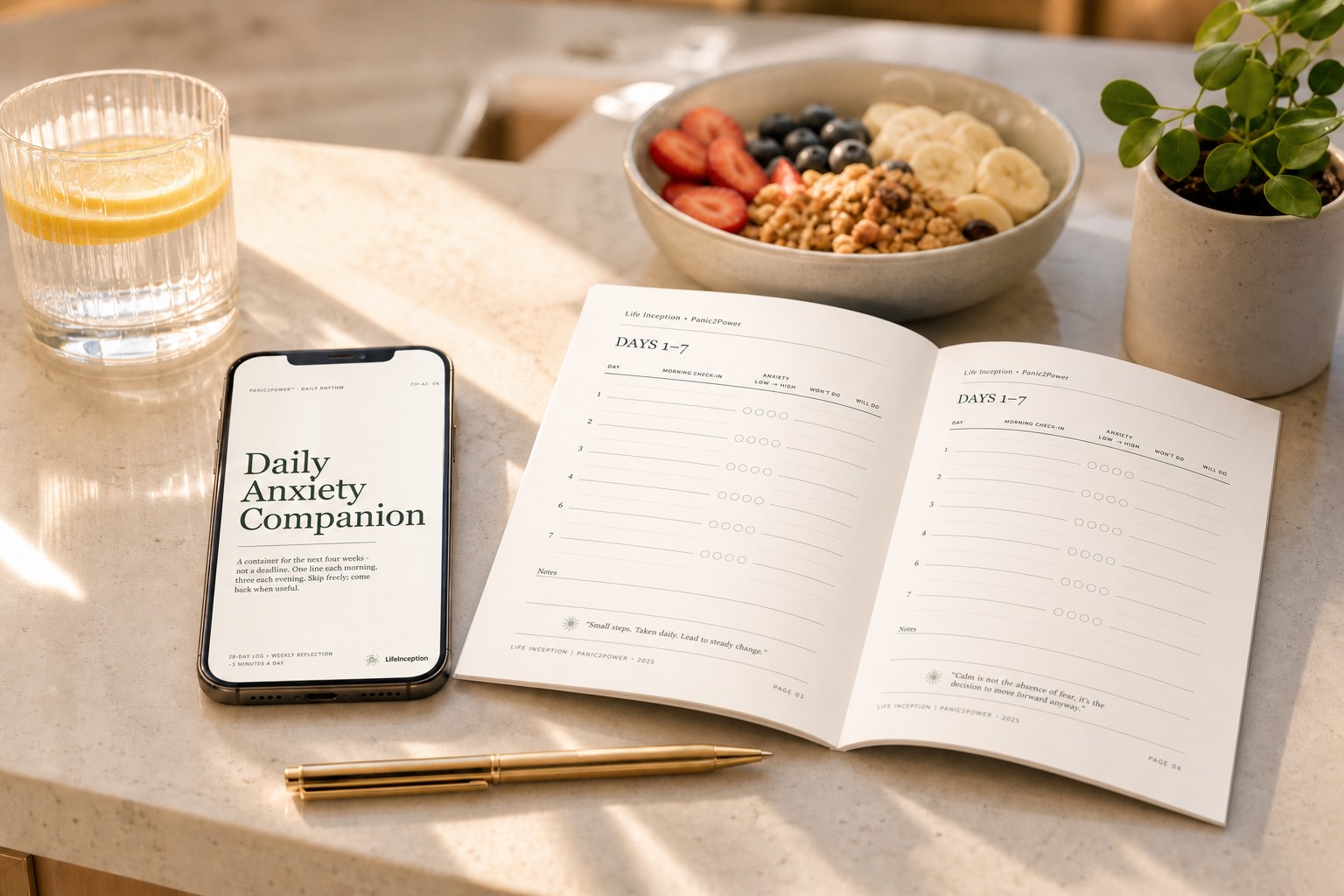
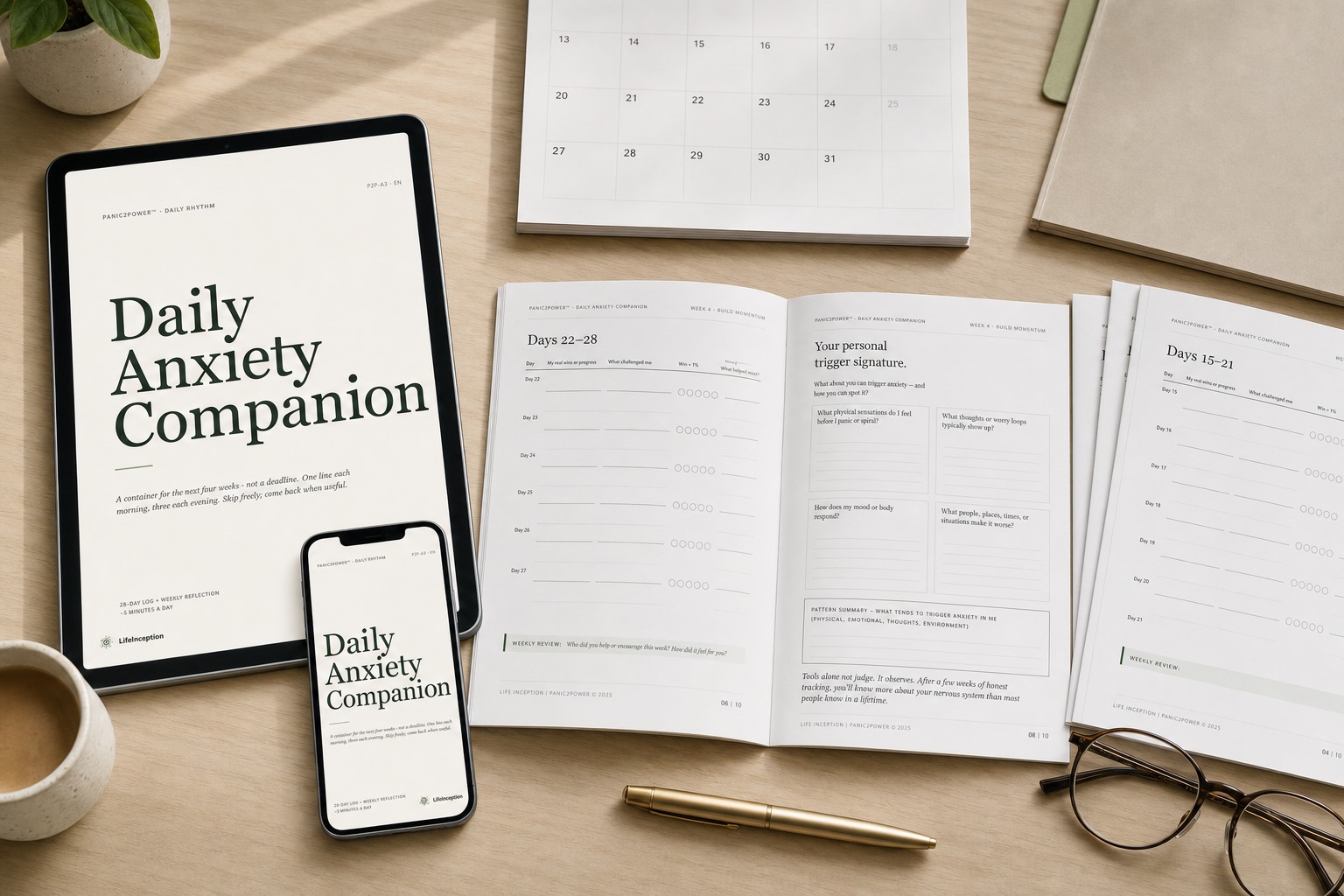
Daily Anxiety Companion
One short check-in in the morning and one at the end of the day. Enough to notice what is changing without turning self-support into another task you have to manage.
Morning + evening, one row
An if-then plan and an evening log share a single line — no double logging.
Feeds your Blueprint
A monthly Pattern Summary reports straight back to your Workbook.
10 pages 4 weeks of logging
~1 min per day
Best for building the habit
Go Deeper
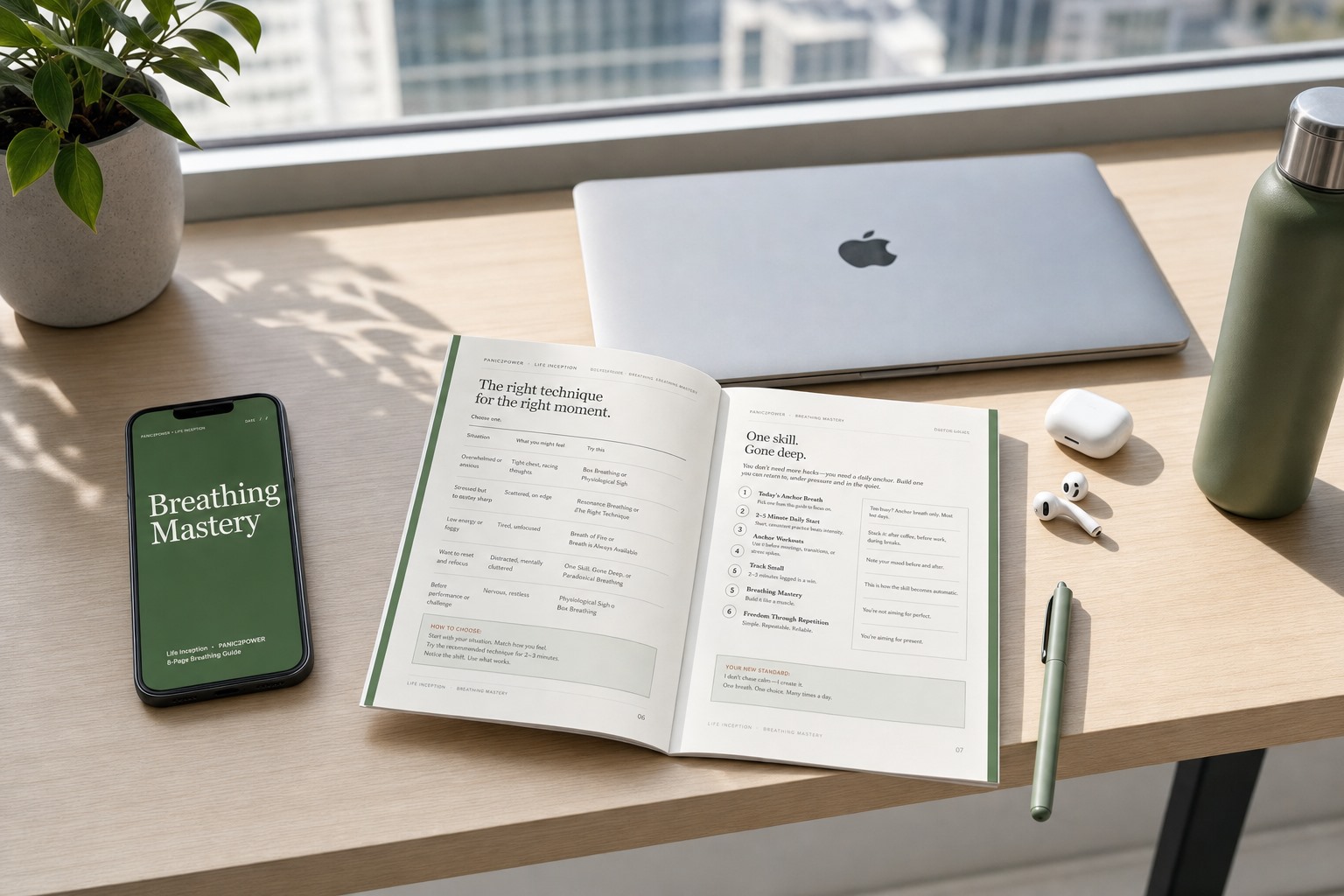
Breathing Mastery
Not another reminder to "just breathe." This guide helps you understand which technique fits the moment, so one disappointing attempt does not make you assume breathing simply does not work for you.
The science, not just the steps
Real citations — Porges, the Huberman Lab, Lehrer & Gevirtz.
Three techniques, one job each
Know exactly which is for a spike, which is for prep, which is for baseline.
8 pages Dense, not long
3 techniques
Best for trusting the technique
Also Included
Two more pieces, part of the core system.
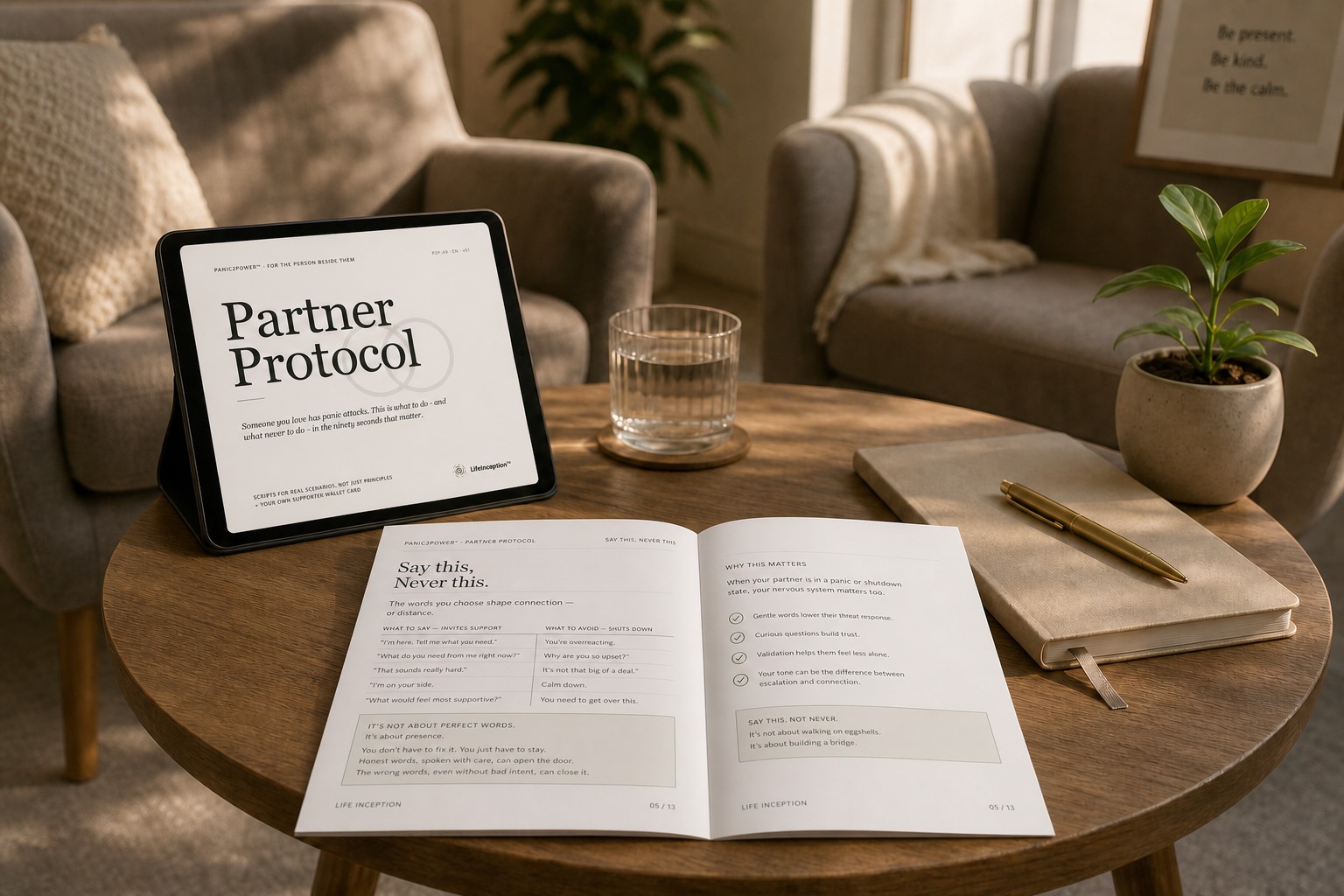
Partner Protocol
For the person beside them — what to say, what never to say.
$27 value — included
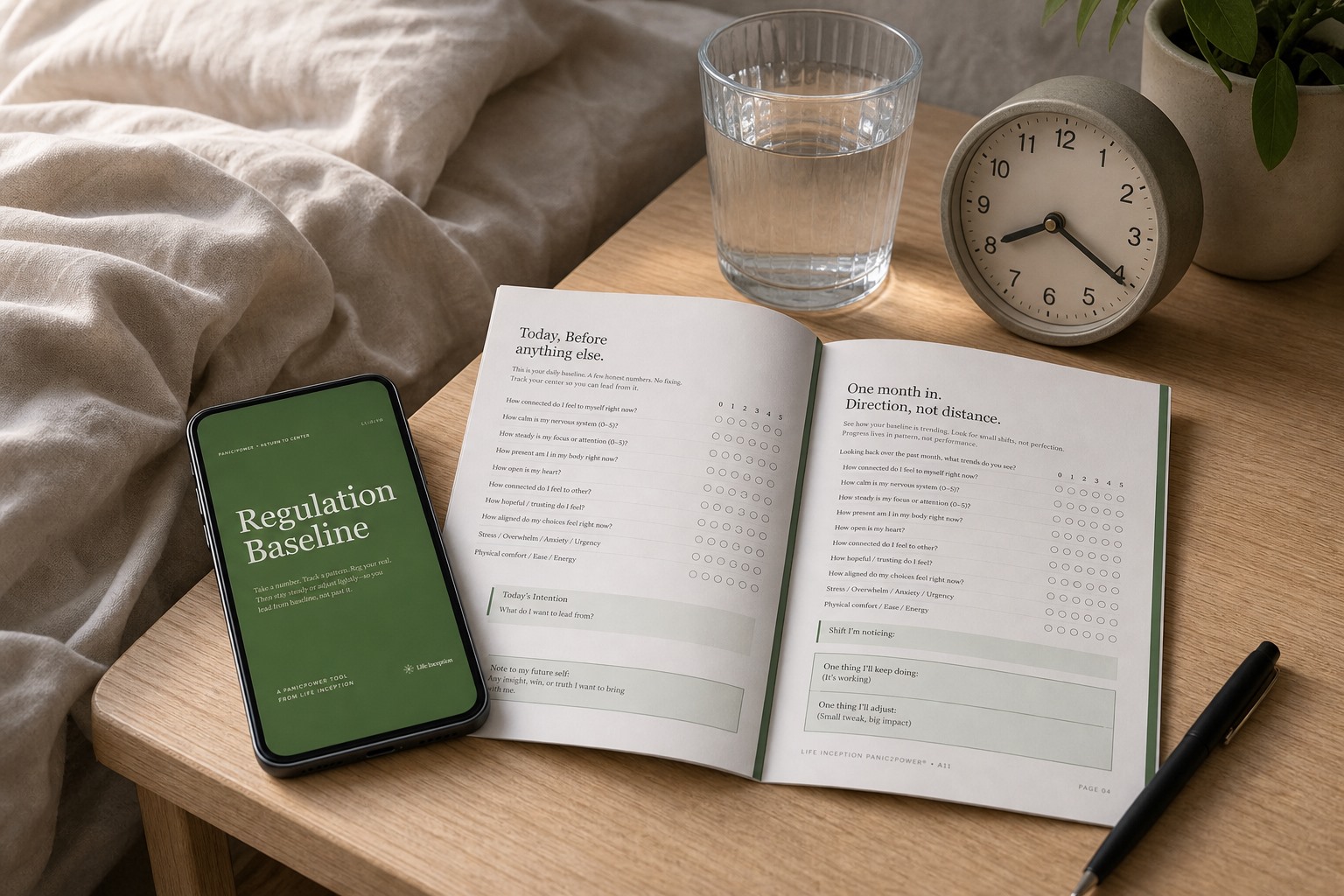
Regulation Baseline
A Day 0/30/90 self-assessment — numbers showing whether it worked.
$25 value — included
Plus, Included Free
Three bonuses, no extra charge.
Pocket Cards CollectionFree bonus
Wallet-sized cards for the moments the main tool doesn't cover.
$10 value — included
Daily Companion — A5 EditionFree bonus
The same daily tracker, sized for a smaller notebook or bag.
$20 value — included
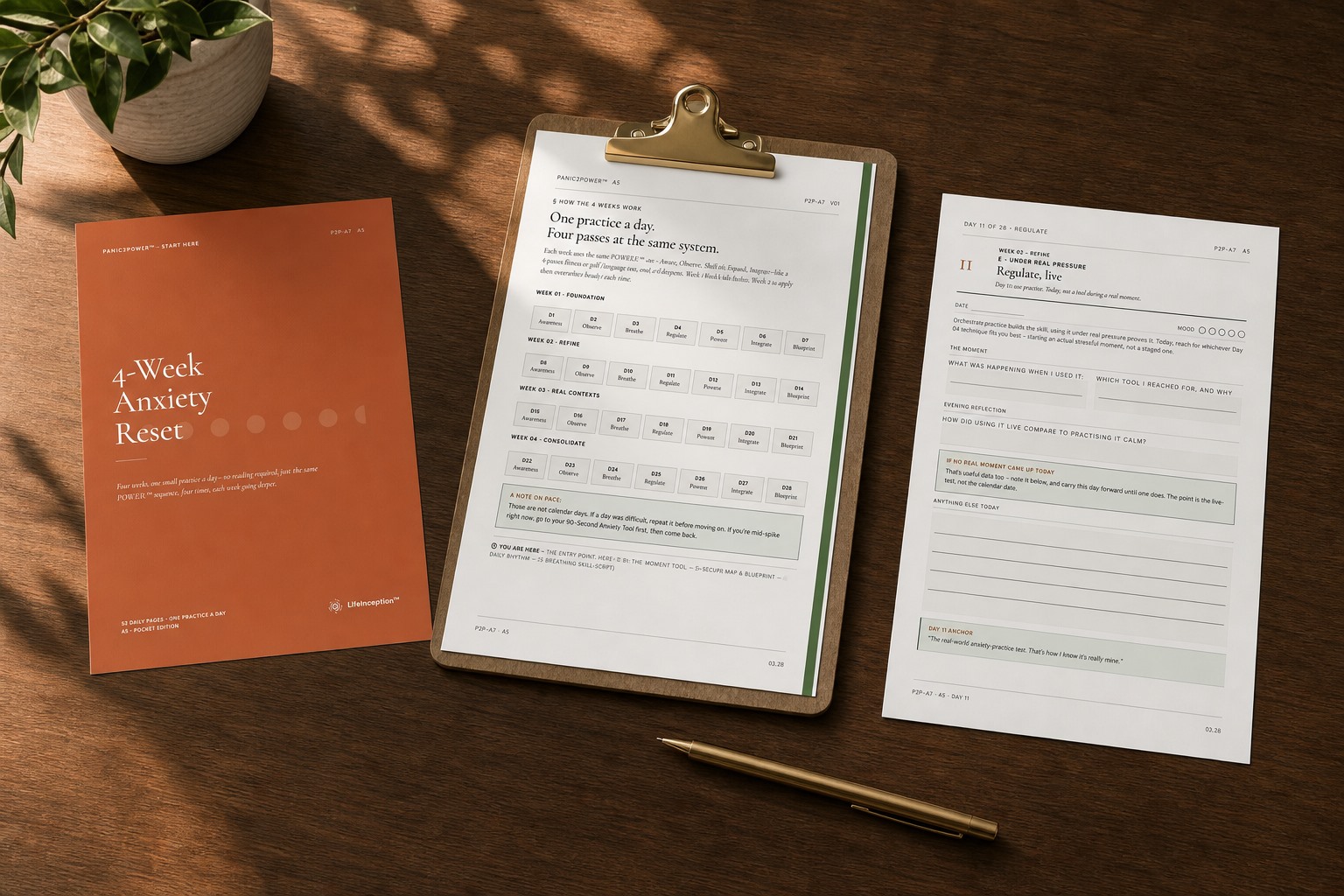
Extended 4-Week Reset — A5Free bonus
Keep going past Day 7 with four more weeks of the same practice.
$47 value — included
Everything Included
Seven pieces. Three bonuses. One system.
No subscriptions. No upsells. Everything is available in one place, with each resource giving you a clear job and a clear moment to use it.
Created from experience. Refined through practice. Built to help you.
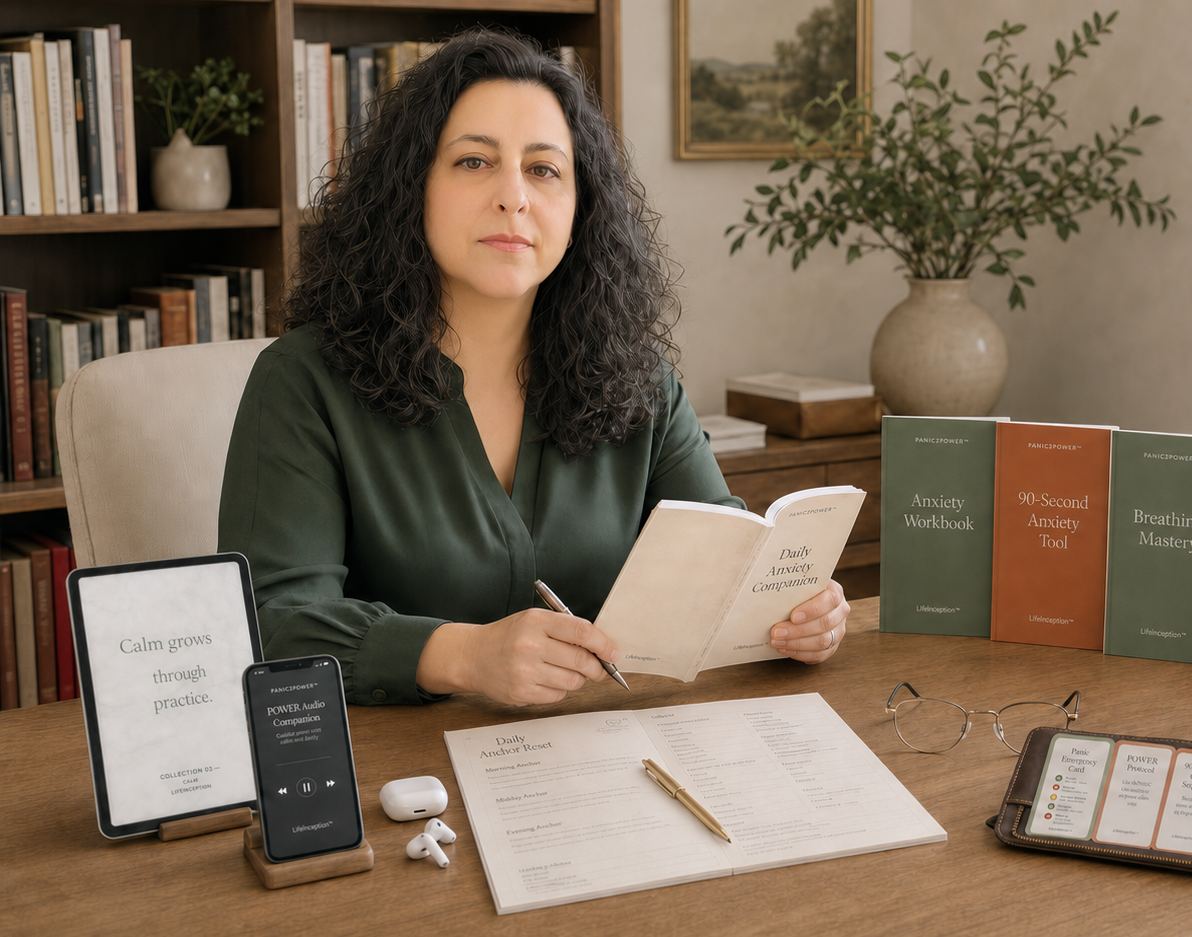
This was not created by collecting anxiety advice from the internet. It grew from lived recovery, decades of working with people under pressure, and the practical question I kept returning to: what can someone actually use when thinking clearly feels difficult?
Every part exists for one reason: to give you something usable when anxiety makes it hard to think.
I lived through anxiety and panic attacks myself.
That is why every tool is built for the moment clear thinking gets hard — not for calm reading afterward.
25
25+ years in global leadership — Estée Lauder, Carnival, Darphin, GoDaddy and Avon.
A Master’s in Economics, an aMBA, and leadership training across nine countries shaped how this system works under real pressure.
One-to-one coaching and workshops with real clients.
Working with real people showed me where advice usually fails, and what actually helps in everyday life.
Certified Points of You® Practitioner.
It shaped tools built around practical reflection, not generic positive thinking.
Some of these tools lived in my notebook long before they became a system.
I did not build this in a weekend. Most of it was written, used and adjusted in real life long before it became something you could download.
Learning from teachers and methods across different traditions, including studies in India.
That mix is why the system stays flexible, instead of forcing one approach onto every person.
70
70+ countries, 22+ nationalities — learning how different people cope.
It helped me see what is universally human, not just what works in one culture.
Refined over years before becoming a digital product.
Nothing here was built quickly. Each piece was stress-tested, simplified and used in real situations long before it became a page you could download.
This is not just theory. It is lived, practiced and made usable.
That is why everything leads back to one clear protocol, available through printed pages, phone-friendly tools and daily prompts, so you are not left trying to invent a solution in the middle of a difficult moment.
Why I Created This System
I didn't build this because I studied anxiety.
I built it because I lived it.
I didn't have a breakdown. I had a Tuesday. Coffee on the table, morning light, everything technically fine — and the familiar tightening in my chest I'd been calling normal for so long I'd almost stopped noticing it. I know what it feels like to look completely functional on the outside while your nervous system fights a private battle inside.
I tried things that helped briefly, then didn't — books that explained everything and changed nothing, apps I abandoned, advice that assumed I had time and energy I didn't have. Until a few small, usable things started to work, not because they were profound, but because they were there, written down, when I couldn't think.
This system was created for the person who doesn't need another motivational quote — who needs something practical to open in the middle of a hard day and actually use. That's who I made this for. Because that was me.
Snejina
Founder of Life Inception · 25+ Years in Leadership · 5+ Years Beyond Chronic Anxiety
Built from lived experience Created for real life Practice-tested tools Made for people who keep showing up Yours for life
Supporting clinical teams in a high-pressure healthcare environment.
“
What I did not expect was how much it helped to read something that described my exact experience without diagnosing it. This was the first thing that made me feel recognised rather than categorised.
C
Carla N., 26
Product Manager
Making constant decisions in a fast-moving professional environment.
“
The trigger tracker showed me Sunday evenings are where it concentrates. Everything I dreaded about Mondays was one specific conversation I was never having. That clarity changed what I actually needed to work on.
L
Laura B., 50
Senior Account Director
Managing demanding client expectations in a high-accountability role.
“
This toolkit was made for that — the woman who is managing fine on the outside and quietly exhausted by the performance of it. That is the most accurate thing I have ever read about how I live.
*All testimonials were shared privately and are published here with the individuals’ permission. Names are shortened where appropriate to protect personal privacy.
Before you decide
This system is not for everyone.
If you're looking for a quick fix or overnight results
If you are looking for information only, without putting any of the tools into practice
If you're seeking clinical therapy or crisis support
If you're unwilling to spend 10–20 minutes a day on yourself
This is for you if
You've been managing quietly. For a long time.
You keep functioning, but anxiety, tension or mental pressure rarely switches off completely
You are exhausted from managing everything on your own
You want a plan you can follow, not more theory to remember
You are ready to work with your anxiety rather than fight it
You deserve support that fits real life — and a clear next step when carrying everything alone becomes too much.
Common Questions
A few things you might be wondering.
Everything you need to feel confident before you get started. If you have another question, just reach out. I'm here to help.
Seven core pieces, one integrated system, each with exactly one job: the 90-Second Anxiety Tool, the Anxiety Workbook, the 7-Day Anxiety Reset, the Daily Anxiety Companion (A4), Breathing Mastery, the Partner Protocol, and the Regulation Baseline (your Day 0/30/90 progress check). Plus three included bonuses: the Pocket Cards Collection, the Daily Companion A5 edition, and the Extended 4-Week Reset A5 edition. Every piece works on your phone exactly as it arrives, and print-friendly versions are included throughout.
No. There are no videos to keep up with and no modules waiting to be completed. You use the cards, pages and guides when they are useful to you, at your own pace.
No. One page or one card is enough to begin. If choosing still feels like too much, start with the 7-Day Anxiety Reset and follow the day-by-day sequence. You do not need to understand or use everything at once.
That is exactly why the first step is so small. Save the 90-Second Anxiety Tool to your phone or place the card in your wallet. You do not need to complete anything before it becomes useful. Everything else can wait until you have more space.
The free guide teaches you the five steps — once. The system installs them: the 90-Second Anxiety Tool for the moment itself, Breathing Mastery that lowers your baseline, the Workbook and Daily Companion that find and track your pattern, and the 7-Day Reset that sequences it all. Knowing the steps is free. Having them ready everywhere you'll need them — on the days you can't think clearly — is what the system is for.
You receive instant access via email the moment your purchase is confirmed. Nothing ships. Everything is available immediately — you can be using the 90-Second Anxiety Tool tonight.
No. This system is not a substitute for therapy, medical care or crisis support. It is a practical self-support resource for emotional regulation, reflection and daily grounding. If you are in crisis or currently working with a clinician, please continue that support — these tools can work alongside professional care, in the space therapy can't cover: Tuesday afternoon, between sessions.
Yes. This is primarily for chronic and high-functioning anxiety — the kind that may look manageable from the outside while quietly draining you inside. You do not need to experience panic attacks or be in acute distress to benefit from having a clear plan.
It was written for women because that's who I am and who I know best — but the tools are body-first and universal. If the words on this page describe you, the system will work for you.
This is a digital product with instant access, so all sales are final. Please read the page carefully before purchasing. If you're unsure, you can start with the free guide first. Questions before buying? Ask — we'd rather answer honestly than have you buy something that isn't right for you.
Still have questions?
I personally read every message. You're not alone in this.
You do not need another promise.
You need something to return to when your mind won't stop, your body won't settle, or the pressure finally becomes too much.
PANIC2POWER™ gives you a clear place to begin and something practical to return to when your mind will not slow down. A seven-piece core system, three bonuses, instant access, $47.